

Table of Contents
- Coffee vs Energy Drinks: A Quick Comparison for Drivers
- Caffeine Content and Alertness: What the Science Shows
- The Sugar Factor and the Caffeine Crash While Driving
- Understanding FDA Caffeine Guidelines for Adults
- How to Stay Awake While Driving Long Distances: Beyond the Cup
- Rally-Ready Fuel: Choosing Coffee for the Road Ahead
- Final Verdict: Which Drink Wins for Your Drive?
- Frequently Asked Questions
Last Updated: September 7, 2026
Coffee vs Energy Drinks: A Quick Comparison for Drivers
Coffee vs energy drinks for driving is a debate that comes down to more than just caffeine milligrams. When you're staring down a 600-mile stretch of highway or a demanding off-road stage, the choice between a thermos of coffee and a can of energy drink can determine whether you arrive alert or fighting fatigue. At Rx4Adventure, we've spent countless hours behind the wheel, and we know that sustained energy is about the entire package: caffeine, sugar, and how your body processes both.
The stakes are real. Driving while tired is estimated to contribute to approximately 20% of all road accidents, according to general traffic safety data cited by Quora. That makes understanding your caffeine choices a safety issue, not just a preference. Below, we'll break down the science, the crash factor, and practical strategies for staying sharp on long drives.
Caffeine Content and Alertness: What the Science Shows
Coffee wins on caffeine delivery for most drivers. A standard 8-ounce cup of coffee contains approximately 95 mg of caffeine, as noted by United Truck School's comparison of caffeine content. A typical 8-ounce energy drink contains roughly 80 mg, though some "extreme" cans pack 200 mg or more. The real difference is in how you consume it: coffee is sipped hot and slowly, while energy drinks are often chugged cold, delivering a rapid spike.
That rapid spike matters. Clinical trials at Washington State University found no significant difference in caffeine absorption and metabolism between coffee and energy drinks, according to research from the WSU College of Pharmacy and Pharmaceutical Sciences. Both deliver caffeine to your bloodstream at similar rates. What differs is the crash profile, which we'll get to next.
The Sugar Factor and the Caffeine Crash While Driving
The crash isn't just about caffeine wearing off, it's a physiological cascade triggered by what you consume alongside it. Energy drinks often contain 25-30 grams of sugar per 8-ounce serving, while black coffee contains none. That sugar hits your bloodstream rapidly, causing a spike in blood glucose followed by a sharp insulin-driven drop. When that drop coincides with caffeine's half-life (roughly 5-6 hours), you experience a compounded fatigue that can hit mid-drive.
Here's the mechanism most articles skip: caffeine blocks adenosine receptors, preventing the brain from registering sleep pressure. But when the caffeine molecules metabolize, those receptors are flooded with accumulated adenosine, the sleep chemical your body has been producing the entire time. The result is a rebound effect that can make you feel sleepier than before you consumed anything. Sugar accelerates this by destabilizing your blood glucose, which the brain relies on for sustained cognitive function.
How to Mitigate the Crash Before It Starts
Most drivers reach for another drink when the crash hits. The smarter move is preventing the crash from occurring in the first place. Three strategies work well for drivers:
-
Pair caffeine with protein or fat. A handful of almonds, a hard-boiled egg, or a cheese stick slows gastric emptying, which means caffeine enters your bloodstream more gradually. This smooths the absorption curve and delays the adenosine rebound. A common pattern among long-haul drivers is coffee plus a protein bar rather than coffee alone.
-
Time your hydration strategically. Caffeine is a mild diuretic, but the bigger issue is that dehydration amplifies fatigue. Drink 8-12 ounces of water for every caffeinated beverage you consume, but space it out, don't chug water immediately after coffee, as that dilutes stomach acid and can speed caffeine absorption. Sip water steadily between coffee refills to keep hydration levels stable.
-
Use the 30-minute nap window. If you feel the crash beginning, pull over safely and set a timer for 15 minutes. Drink a small amount of coffee (about half a cup) immediately before the nap. Caffeine takes roughly 20-30 minutes to reach peak blood levels, so you wake as the stimulant kicks in, effectively bypassing the groggy rebound phase.
The Sugar-Free Energy Drink Alternative
Not all energy drinks are sugar bombs. Sugar-free varieties use artificial sweeteners like sucralose or erythritol, which don't spike blood glucose. However, they introduce a different concern: some studies suggest artificial sweeteners may trigger an insulin response even without glucose, though the evidence is mixed. For driving purposes, a sugar-free energy drink is a better choice than a regular one if you need a quick boost, but it still lacks the gradual absorption profile that sipping hot coffee provides.
The practical takeaway: if you choose an energy drink, select a sugar-free option and treat it as a short-term tool, not a sustained fuel source. If you choose coffee, drink it black or with a splash of cream, adding sugar recreates the same spike-and-crash cycle that makes energy drinks problematic in the first place.

Understanding FDA Caffeine Guidelines for Adults
The FDA recommends healthy adults limit caffeine intake to 400 mg per day, roughly four 8-ounce cups of coffee. This ceiling exists because excessive caffeine can cause jitteriness, elevated heart rate, and disrupted sleep, all of which impair fine motor control and decision-making behind the wheel. But the FDA guideline is a general health benchmark, not a driving-specific safety standard. For professional drivers, the stakes are different.
The Regulatory Gap for Commercial Drivers
The Federal Motor Carrier Safety Administration (FMCSA) regulates hours of service for commercial truck drivers but does not set a caffeine limit. However, FMCSA rules prohibit operating a commercial vehicle while under the influence of a substance that degrades performance, and stimulant-induced jitteriness can qualify if it compromises vehicle control. Drivers of commercial vehicles are subject to random drug testing, but caffeine is not a scheduled substance, so it won't trigger a positive result. The legal risk is indirect: if a stimulant-induced micro-sleep or a jittery overcorrection causes an accident, the driver's caffeine consumption can be scrutinized in litigation as evidence of negligent fatigue management.
How Caffeine Affects Fine Motor Control
Most discussions of caffeine and driving focus on alertness, but fine motor control is equally critical. At doses above 200 mg in a short window, roughly two energy drinks or two large coffees consumed within an hour, caffeine can induce hand tremor and reduce steering precision. A study on professional drivers found that high caffeine consumers reported more instances of near-misses and lane deviations than moderate consumers, likely due to a combination of tolerance and tremor effects. The mechanism is straightforward: caffeine stimulates the sympathetic nervous system, increasing muscle tension and reducing the smooth, calibrated movements required for precise steering and pedal modulation.
Practical Limits for Driving Scenarios
For a long drive, the FDA's 400 mg ceiling is a useful upper bound, but the smarter limit is lower. Most driving safety experts suggest staying under 200 mg in any two-hour window to avoid the jittery peak that impairs fine motor control. That translates to roughly two cups of coffee spaced across the first half of your drive, then a break before any additional caffeine.
Why Energy Drinks Complicate Compliance
Energy drinks complicate caffeine tracking because of how they're regulated. Many are marketed as dietary supplements rather than conventional beverages, which means they aren't subject to the same labeling requirements as soda or coffee. A can labeled "extreme" can contain anywhere from 160 mg to over 300 mg of caffeine, but the label may not disclose the exact amount. This lack of transparency makes it difficult to stay within safe limits, especially for drivers who consume multiple cans across a shift. Coffee, by contrast, has a well-documented caffeine content that varies predictably by roast and brewing method, allowing for more precise tracking.
How to Stay Awake While Driving Long Distances: Beyond the Cup
Caffeine is a tool, not a solution. The most effective approach to staying awake while driving long distances combines strategic caffeine use with fundamental fatigue management. Plan stops every two hours, get fresh air, and never rely on stimulants to push through genuine sleepiness. Micro-sleeps, where you briefly nod off at highway speed, are a leading cause of fatigue-related crashes.
Circadian rhythm management matters more than most drivers realize. Your body naturally dips in alertness between 2 a.m. and 4 a.m., and again in mid-afternoon. Scheduling breaks or swapping drivers during these windows is more effective than any caffeinated drink. If you're using caffeine, time it about 30 minutes before a critical stretch, then follow it with a 15-minute power nap. The caffeine kicks in as you wake, leaving you refreshed rather than fighting the stimulant's onset.
Hydration is equally critical. Dehydration amplifies fatigue, so alternate coffee with water. A stainless steel bottle in the cup holder serves as a constant reminder to sip water between coffee refills, keeping both your energy and your focus steady.
Rally-Ready Fuel: Choosing Coffee for the Road Ahead
For those who push beyond pavement, coffee quality and preparation matter as much as caffeine content. Cold brew offers a higher caffeine concentration per ounce than hot coffee, with a smoother taste that's easier on the stomach during long drives. It's also naturally sweet, which means you're less tempted to add sugar and set up a crash.
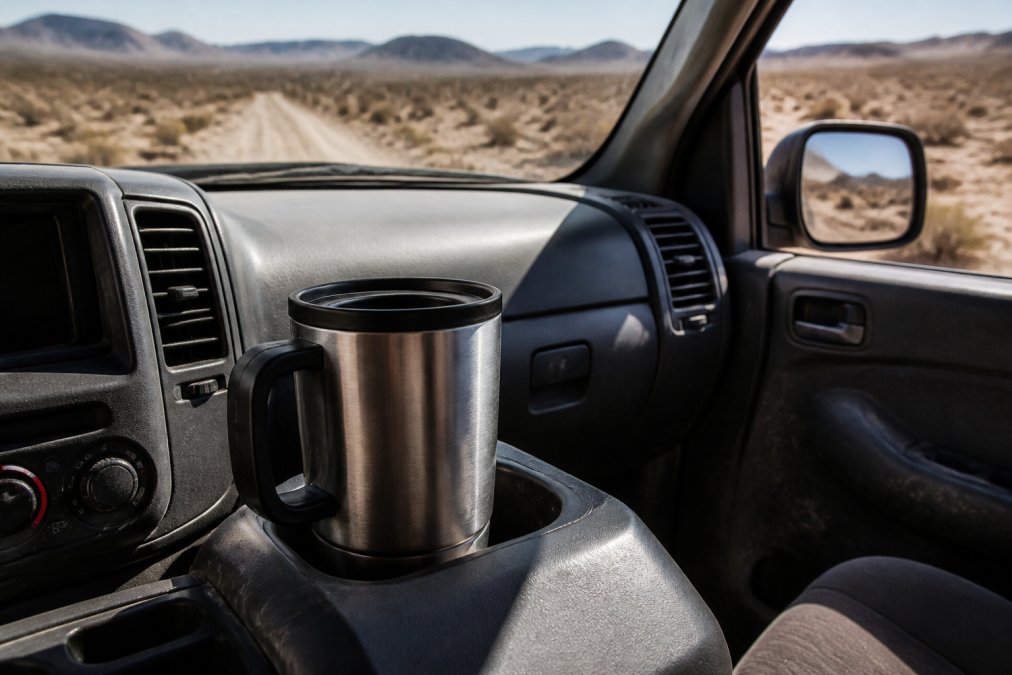
At Rx4Adventure, we built our coffee collection for exactly these conditions. Buckey's Trailhead Cold Brew ($26.99) delivers rich notes of chocolate and buttery toffee with a naturally sweet, velvety finish, designed for those who chase sunrises and dirt roads. It's a medium roast crafted to be enjoyed over ice or as nitro cold brew, perfect for early starts when the trail calls before dawn.

For longer expeditions, Roadbook Roast ($26.99) is our extra dark roast, a blend of specialty-grade Arabica and Robusta beans slow roasted for exceptional depth. The Robusta component provides a higher caffeine kick than Arabica alone, giving you sustained energy for demanding stages. Pair either with our travel mug with a handle ($23.38), which fits most car cup holders and features a spill-proof lid, or our stainless steel water bottle ($35.00) to keep hydration close at hand.
Final Verdict: Which Drink Wins for Your Drive?
Coffee is the better choice for most driving scenarios. It offers comparable caffeine to energy drinks without the sugar spike, provides antioxidants, and allows for controlled, sipped consumption that spreads caffeine delivery across hours. Energy drinks have their place for a quick boost, but the crash risk and potential for hypertension with chronic use make them a poor default for long-haul driving.
The science is consistent: caffeine improves alertness, but sugar and overconsumption undermine its benefits. A 2026 survey of U.S. coffee drinkers found that 71% consume coffee daily, according to Drive Research's annual coffee survey, reflecting coffee's role as a sustainable daily habit rather than an occasional stimulant. Health-conscious messaging increasingly emphasizes coffee as superior to sugary energy drinks due to its antioxidant content and lack of added sugars, as noted by MealDiva and 6abc Action News.
Choosing between coffee and energy drinks for driving isn't just about caffeine content. It's about managing your energy responsibly over hours behind the wheel. Coffee gives you steady, sugar-free alertness that supports long drives without the crash. Rx4Adventure's curated coffee collections, from Buckey's Trailhead Cold Brew to Roadbook Roast, are built for adventurers who need reliable fuel for the road ahead. Get started with Rx4Adventure and make every mile count with coffee that keeps you sharp from sunrise to summit.

Frequently Asked Questions
How many coffees equal the caffeine in a standard energy drink?
A standard 8-ounce cup of coffee contains about 95 mg of caffeine, while many popular energy drinks pack 80 to 200 mg per can. For a typical 160 mg energy drink, you would need roughly two cups of coffee to match the caffeine. The bigger difference is how you consume it: coffee is usually sipped hot, while energy drinks are often downed quickly. That speed of intake can affect how fast the stimulant hits your system.
Is the sugar content in energy drinks a problem for long drives?
Yes. Many energy drinks contain 25 to 30 grams of sugar per can, which causes a rapid spike in blood glucose followed by a sharp drop. That drop can amplify the caffeine crash while driving, leaving you more tired than before. Coffee, especially black or with minimal additives, has no sugar and provides a steadier release of energy. For sustained alertness on long hauls, the sugar load in energy drinks works against you.
What is the best drink to stay awake while driving?
Black coffee is the stronger choice for most drivers. It delivers comparable caffeine to energy drinks without the heavy sugar load that leads to energy crashes. The FDA caffeine guidelines for adults recommend no more than 400 mg per day, roughly four to five cups. For a long drive, start with one cup, hydrate with water, and take planned breaks. No drink replaces sleep, so pair caffeine with rest stops for the safest results.
How long will 200mg of caffeine keep me awake?
Caffeine has a half-life of about 5 to 6 hours in the average adult. A 200 mg dose means roughly 100 mg is still in your system after that time. You will likely feel peak alertness within 30 to 60 minutes, with effects tapering over several hours. Individual metabolism, tolerance, and sleep debt all change this timeline. Do not rely on caffeine past your natural limits, and plan for a full sleep cycle before your next drive.